

- Reaction score
- 1,936
Scientists have discovered a new way of creating superheavy elements by firing supercharged ion beams at dense atoms. The team believes this method could potentially help synthesize the hypothetical "element 120," which would be heavier than any known element.
Researchers may have found a way to create a new superheavy element, known as "element 120," which would be so hefty that it would need to be put in a new row on the periodic table of elements. If they can create this hypothetical element, its atoms could represent an "island of stability" that could revolutionize heavy-element chemistry.
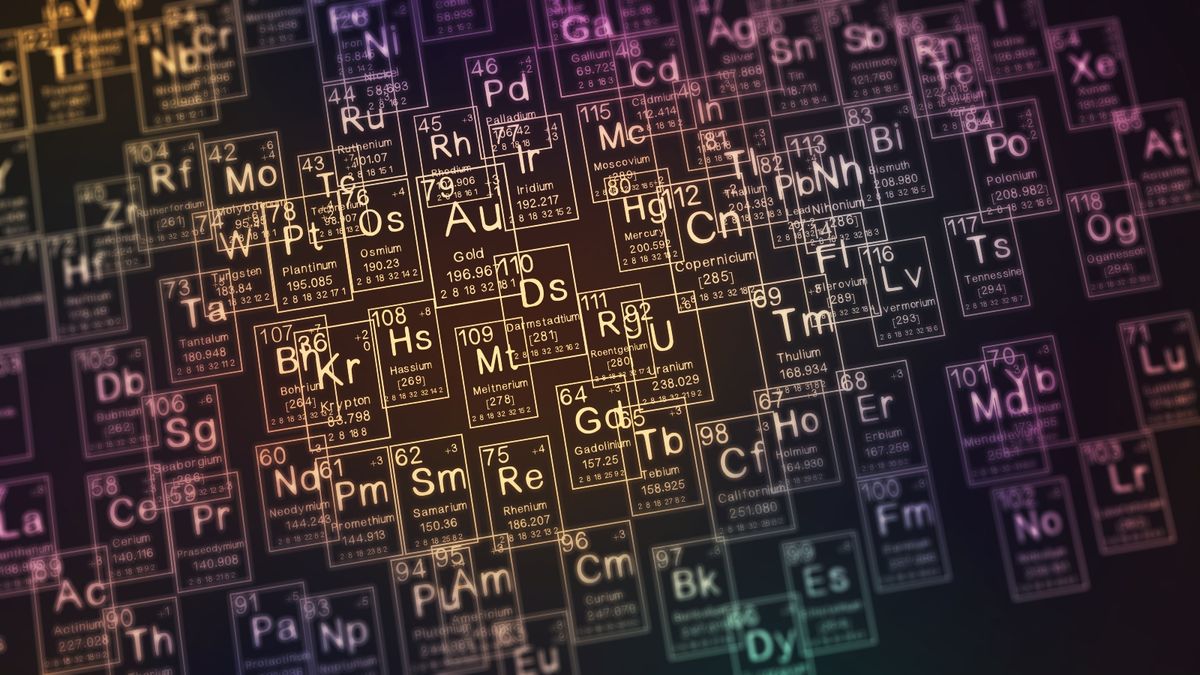
There are currently 118 known elements listed on the periodic table; from hydrogen, which has a single proton in its nucleus, all the way up to oganesson, which was officially named in 2016 and has at least 294 subatomic particles packed into the centers of its atoms (118 protons and at least 176 neutrons).
However, researchers know that, theoretically, there should be even heftier elements in the cosmos — and they have even predicted what these elements will look like and how they'll act. But to find them, we either have to discover new ways to synthesize them on Earth or scour the solar system for their potential whereabouts.
The two most promising potential element candidates are element 119, tentatively named ununennium, and element 120, aka unbinilium. These elements are so massive that they do not fit in any of the seven rows that make up the periodic table. If they are created, they will be added to a new eighth row on the iconic chart. However, neither has been synthesized, despite multiple attempts.
 www.livescience.com
Researchers may have found a way to create a new superheavy element, known as "element 120," which would be so hefty that it would need to be put in a new row on the periodic table of elements. If they can create this hypothetical element, its atoms could represent an "island of stability" that could revolutionize heavy-element chemistry.
There are currently 118 known elements listed on the periodic table; from hydrogen, which has a single proton in its nucleus, all the way up to oganesson, which was officially named in 2016 and has at least 294 subatomic particles packed into the centers of its atoms (118 protons and at least 176 neutrons).
However, researchers know that, theoretically, there should be even heftier elements in the cosmos — and they have even predicted what these elements will look like and how they'll act. But to find them, we either have to discover new ways to synthesize them on Earth or scour the solar system for their potential whereabouts.
The two most promising potential element candidates are element 119, tentatively named ununennium, and element 120, aka unbinilium. These elements are so massive that they do not fit in any of the seven rows that make up the periodic table. If they are created, they will be added to a new eighth row on the iconic chart. However, neither has been synthesized, despite multiple attempts.
Scientists just got 1 step closer to creating a 'superheavy' element that is so big, it will add a new row to the periodic table
Scientists have discovered a new way of creating superheavy elements by firing supercharged ion beams at dense atoms. The team believes this method could potentially help synthesize the hypothetical "element 120," which would be heavier than any known element.


