

- Reaction score
- 1,936
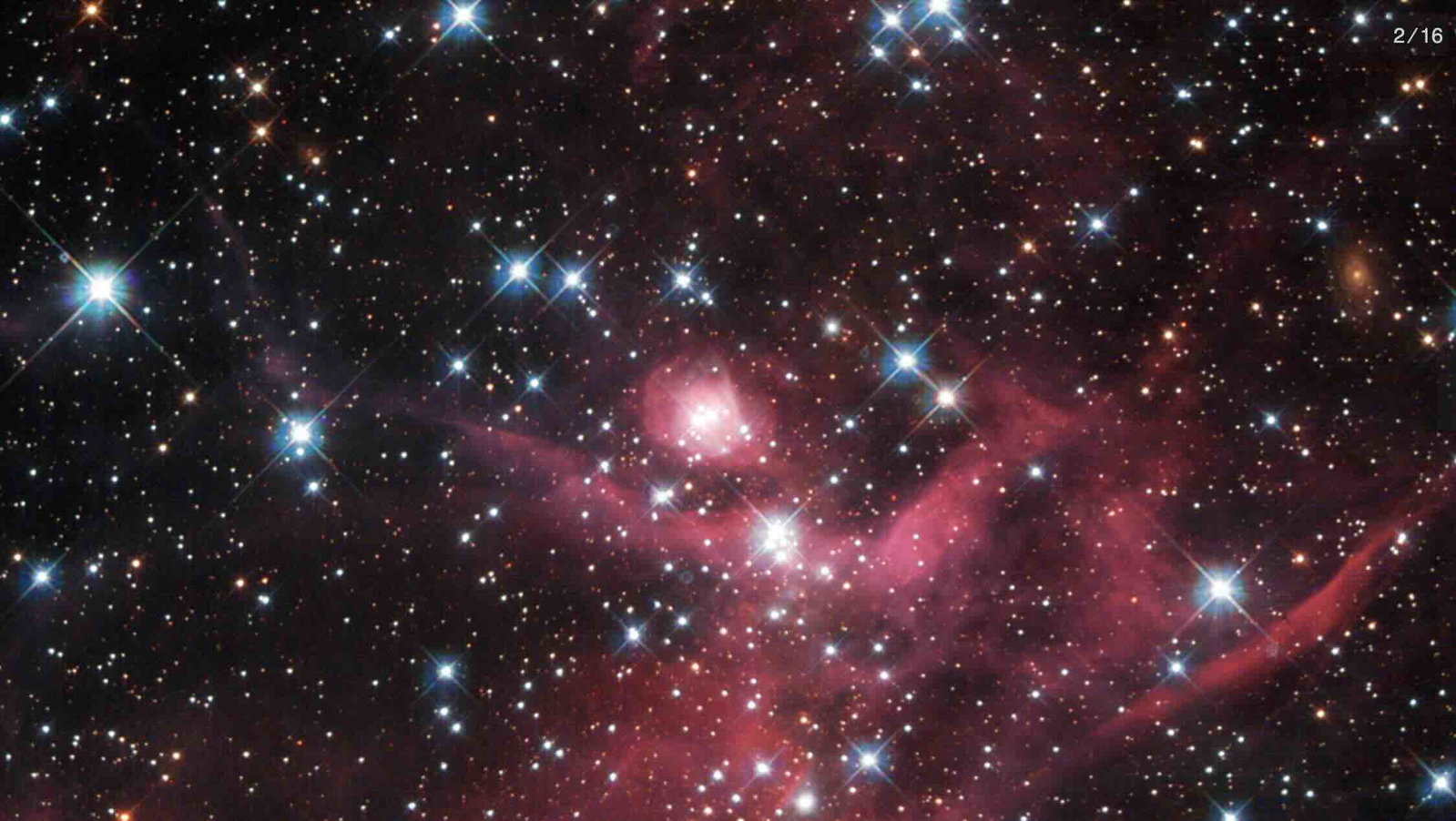
For just an hour in late 2019, a cosmic mystery revealed itself to astronomers in an unprecedented way: by bending the light of a star as it passed between Earth and a distant galaxy.
The odd event unfolded on the evening of December 18, 2019, as a star in the Large Magellanic Cloud suddenly—and only for a short time—appeared to become brighter. But what could cause an ordinary star to randomly illuminate in this way, becoming a cosmic beacon for only an hour?
Astronomers considered a few possibilities, the most likely being that some kind of object—and one possessing a significant amount of mass—passed in front of the star, warping its light toward Earth through gravitational microlensing.
Now, the curious object that captured the star’s light for an hour in 2019 has been given a name: Phoebe. Unraveling the mystery as to what it actually was constitutes an intriguing question for astronomers, one which has now been tackled in a recent paper.
 thedebrief.org
The odd event unfolded on the evening of December 18, 2019, as a star in the Large Magellanic Cloud suddenly—and only for a short time—appeared to become brighter. But what could cause an ordinary star to randomly illuminate in this way, becoming a cosmic beacon for only an hour?
Astronomers considered a few possibilities, the most likely being that some kind of object—and one possessing a significant amount of mass—passed in front of the star, warping its light toward Earth through gravitational microlensing.
Now, the curious object that captured the star’s light for an hour in 2019 has been given a name: Phoebe. Unraveling the mystery as to what it actually was constitutes an intriguing question for astronomers, one which has now been tackled in a recent paper.
Something Revealed Itself by Bending the Light of a Distant Star in 2019—Now Astronomers Are Racing to Find Out What It Was
For just an hour in late 2019, a cosmic mystery revealed itself to astronomers in an unprecedented way: by bending the light of a star.
thedebrief.org
Last edited:


